A planner needs to understand what the numbers mean and how they relate to the business. Xanaplan lets users ask about planning data and model logic in plain language, alongside the Anaplan page they are working on.

The Problem
Having access to a planning model does not make every business question easy to answer. A user may need to find a value for a particular product and period, understand which products belong to a category, or explain the rules behind a metric. Doing that can require knowing where the data lives, how the hierarchies are organized and how the calculations work.
A question such as “Which products are under Shampoo?” can become a search through pages and selections. Explaining a calculation may require documentation or help from someone who knows the model. That extra work interrupts the planning task, especially for users who work with the results but did not build the model.
Xanaplan addresses this by giving users a way to ask directly for the information or explanation they need. The assistant uses the relevant model data and business definitions to answer, with sources the user can inspect.
A Conversation Beside the Plan
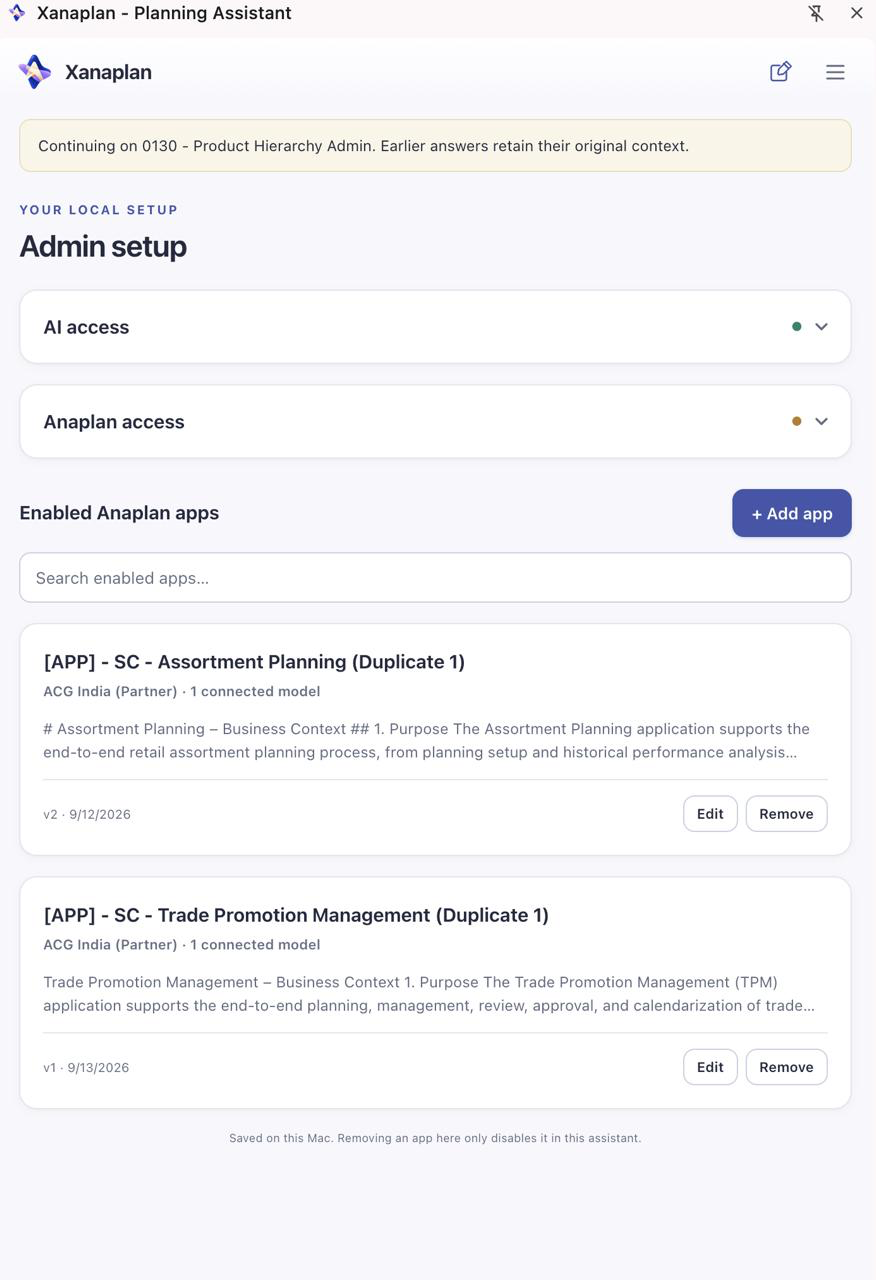
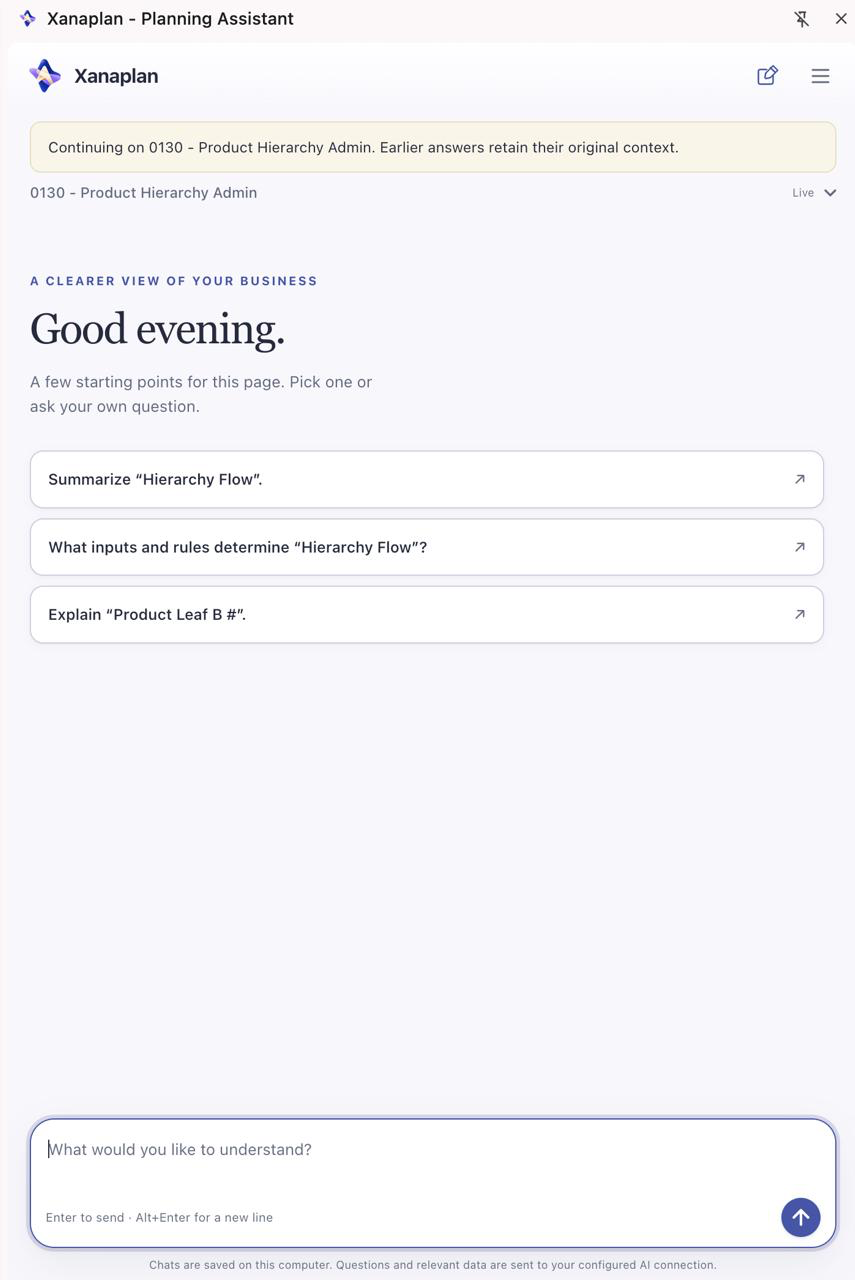
Xanaplan runs in a Chrome side panel. It follows an enabled Anaplan app and its published board or worksheet, or stays pinned to a page I choose. Saved business definitions give the assistant context for interpreting the model, while starter questions draw on verified page cards and selections.
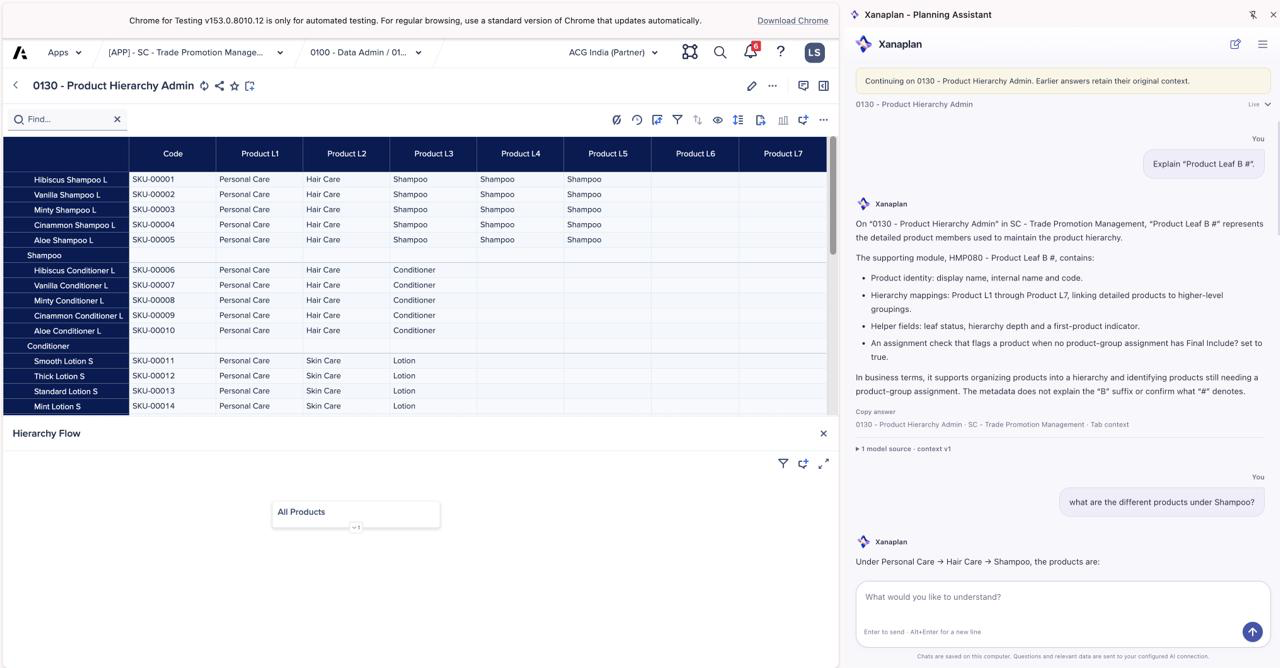
- Page-aware questions: use the current page and confirmed selections as the starting point for an answer.
- Inspectable sources: answers include model sources, effective filters and read limits, so the evidence can be checked.
- A visible working state: activity shows when the assistant is finding data or preparing an answer, with a Stop control available throughout.
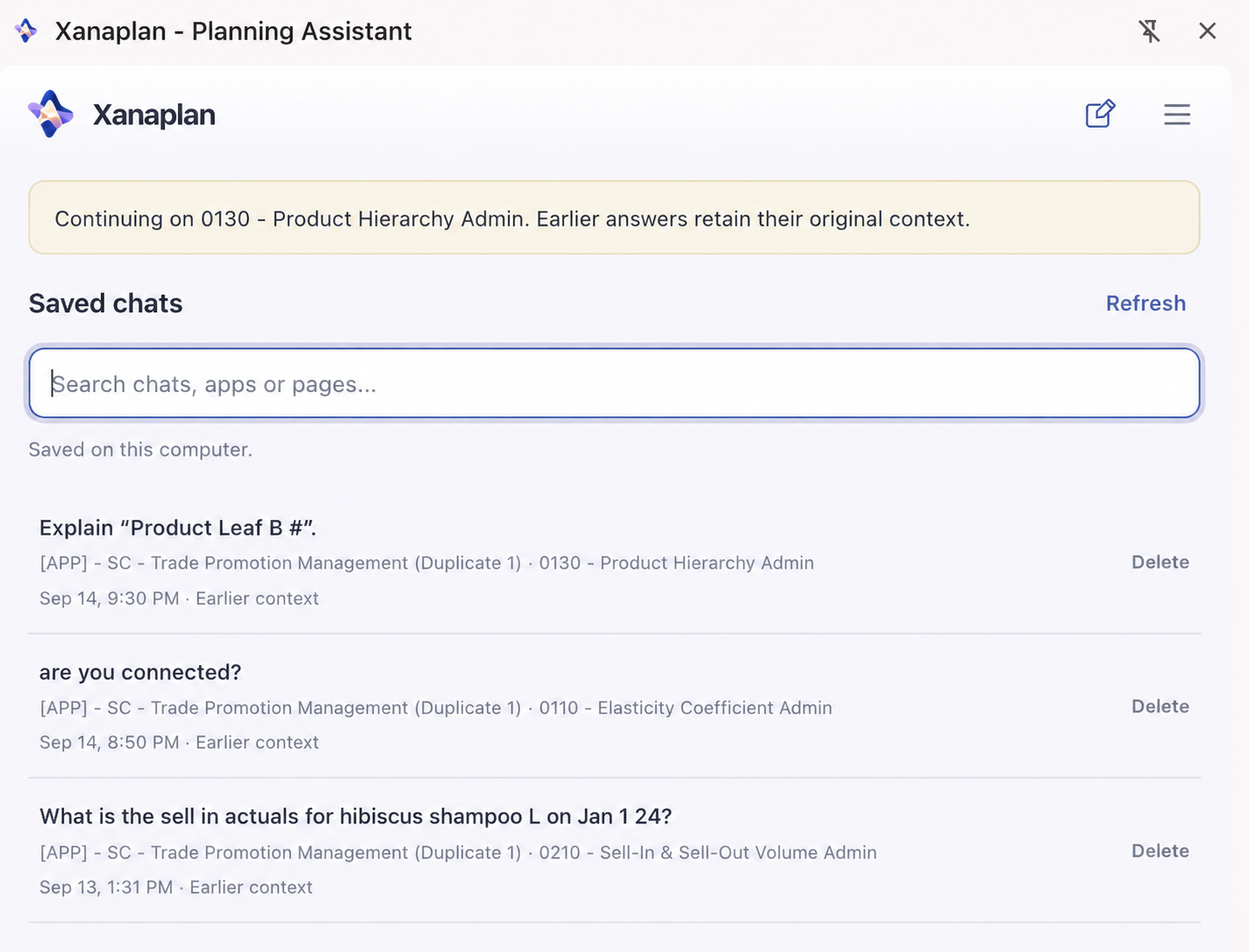
- Conversations that carry forward: completed chats are saved locally and can continue on the current page or with re-verified saved selections.
Keeping the Context Attached
Each question uses a frozen, verified snapshot of its page, model and selections. If I navigate to another page while an answer is running, that answer keeps its original context and sources. The new page becomes an option for the next question rather than silently changing the meaning of the current one.
The same principle applies to history. Reopening a conversation does not make yesterday’s evidence current. Xanaplan re-verifies the selected context before continuing, preserves the sources on earlier answers and keeps unresolved selections explicit.
How It Works
The extension handles page discovery, selections and the conversation interface. A local Node.js helper verifies the context, stores settings and chats, and coordinates the configured OpenAI or Claude connection. My anaplan-mcp project provides model access through the Model Context Protocol (MCP), which connects the assistant to a restricted set of Anaplan read tools.
Reads stay within one verified source model per question and are limited to page sources and relevant formula dependencies. Unknown or unsupported filters block numeric reads instead of being guessed. The helper binds to the local machine and checks the extension’s pairing token and request origin.
Current Scope
Xanaplan is built for local, single-person use with published boards and worksheets. It cannot change cells or lists, run imports or processes, or administer models. Reports, draft pages and some complex selector contexts remain outside its supported scope. Questions, business context and relevant retrieved data pass through the configured AI connection; settings and completed conversations are stored locally.
Automated checks cover context changes, cancellation, saved conversations and read restrictions using synthetic adapters. Compatibility and answer accuracy still need validation against the Anaplan app being used. The repository documents those limits alongside a live acceptance checklist.
Explore the Project
The GitHub repository includes the source, architecture notes and Apache 2.0 license. The setup guide walks through installing the extension, starting the local helper, connecting an AI provider and enabling an Anaplan app.